blog
Capacity Is More Than Headcount
Why Phase 2 will require providers to think more broadly about where operational capacity comes from - and how it is coordinated.

The Staff element of the McKinsey 7S Framework considers whether an organisation has the workforce capacity required to execute its strategy.
For Awaab’s Law Phase 2, increasing permanent headcount is only one part of that equation. Providers are already balancing significant financial and investment pressures, while the expansion of Awaab's Law will require access to a much broader range of specialist resources. Unsurprisingly, the Regulator of Social Housing has identified labour constraints, supply-chain disruption and contractor risk among the pressures facing the sector.
A more resilient capacity model is therefore likely to draw on internal teams alongside contractors and specialist supply-chain partners, allowing resources to flex as demand changes. Some of the additional hazards coming into scope will also require specialist expertise that providers may not hold internally, or that would be inefficient to maintain permanently for relatively infrequent demand. Structural hazards, for example, may require specialist engineering expertise to investigate and resolve. Providers therefore need access to the right external capability when it is required, while retaining effective coordination and oversight as delivery extends beyond organisational boundaries.
Of course, extending operational capacity through contractors and specialist partners also extends the network of people who need to understand how Awaab's Law applies to their work. Landlords retain responsibility for compliance when contractors are used, while contractors should understand the relevant statutory timeframes and report additional hazards identified during property visits. Depending on the legal relationship between the parties, a contractor becoming aware of a potential hazard may also constitute landlord awareness. Every person operating on the provider's behalf therefore needs an effective route for information to enter the statutory process quickly and accurately.
The challenge, then, is to expand operational capacity without making the operation harder to coordinate. As more people and specialist partners become involved, providers need visibility of the capacity available to them, where it is deployed and the exact status of repairs happening across the wider delivery network.
Technology can help provide that visibility. A connected platform can bring internal and external resources into the same operational environment, while AI can support work allocation and contractor orchestration against live demand. Used effectively, intelligent orchestration can help providers make better use of available capacity before assuming that every increase in workload requires another permanent employee.
Technology can also provide continuity where staff turnover is high. Embedded workflows and accessible operational information reduce the extent to which consistent delivery depends on knowledge residing with individual employees.
Interestingly, the Regulator has faced its own version of the capacity challenge following the expansion of its remit. Its 2025-28 Corporate Plan describes building additional workforce capacity while simultaneously developing the systems, processes and enabling functions needed to use that capacity effectively. The principle translates well: additional people create capacity, but the organisation around them determines how effectively that capacity can be deployed.
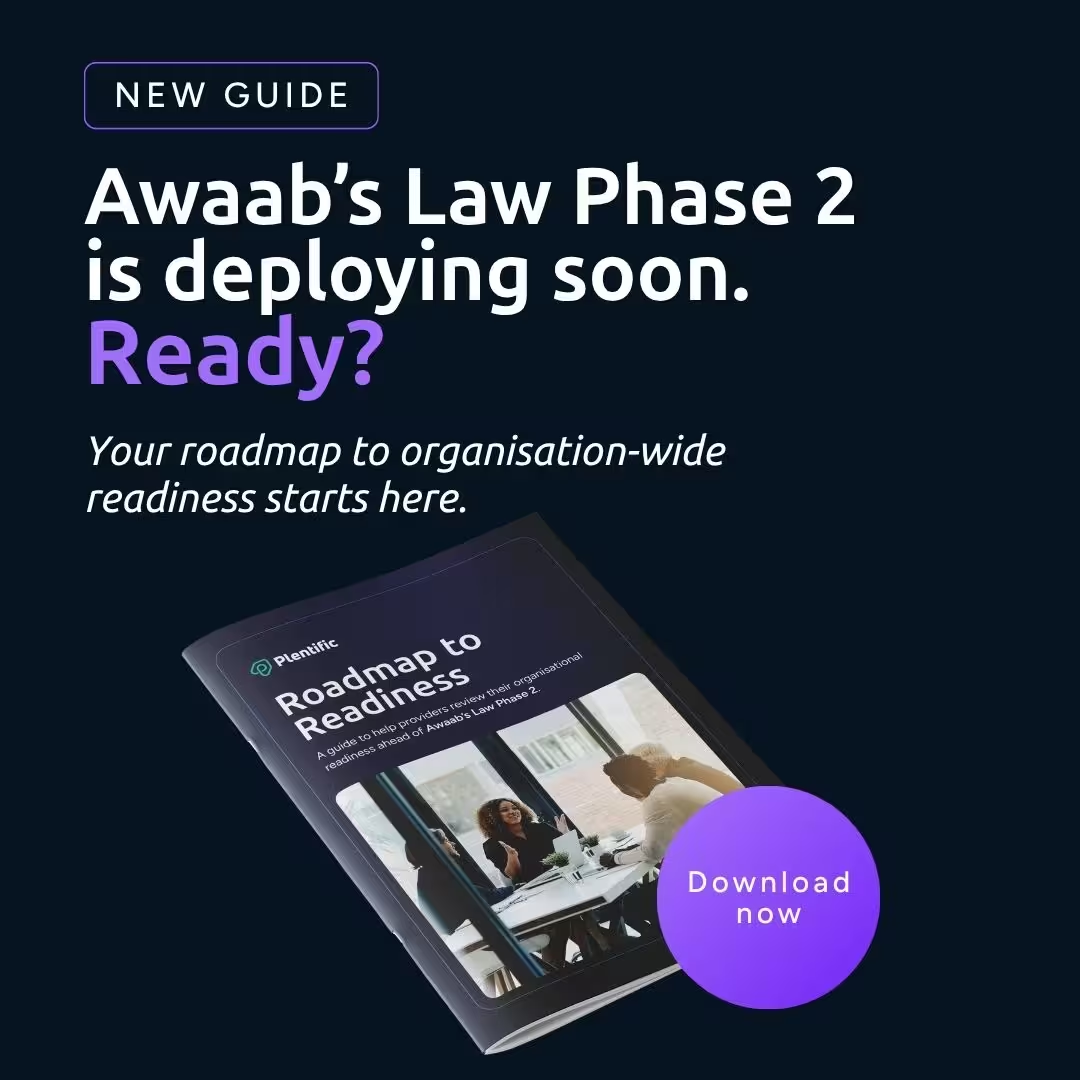
Staff is the sixth element in the McKinsey 7S Framework for organisational change, which we use throughout our Roadmap to Readiness to examine Phase 2 preparedness. The guide looks more closely at workforce capacity and resilience, including the role of contractors and external delivery partners as providers prepare for increased operational demand.